90s Japanese Fashion for Women: Vintage Style Guide
The 90s were Japanese fashion’s wildest, most joyful decade. In Harajuku, teenagers piled on every color, texture, and accessory they owned; in Shibuya, the gyaru scene perfected platform boots and mini skirts; and in the backstreets, vintage American workwear got remixed into something entirely new. Three decades later, 90s Japanese fashion is back — and this vintage style guide will show you how to wear it.
What makes 90s Japanese fashion so enduring is its spirit of fearless self-expression. Long before social media, Tokyo’s youth were dressing for each other on the street, inventing subcultures outfit by outfit. That energy translates surprisingly well to today: the silhouettes are comfortable, the pieces are thriftable, and the attitude is pure fun.
Below, your complete 90s Japanese fashion vintage guide — the essential throwback pieces to hunt down, plus how to style retro Harajuku-inspired looks for modern life. We’ve also answered the questions readers ask most about pulling off 90s Japan style today.
90s Japanese Fashion Essentials: The Harajuku Throwback Wardrobe
To build a 90s Japanese fashion wardrobe, start with the icons. These are the pieces that defined the decade in Tokyo and still read as unmistakably 90s today:
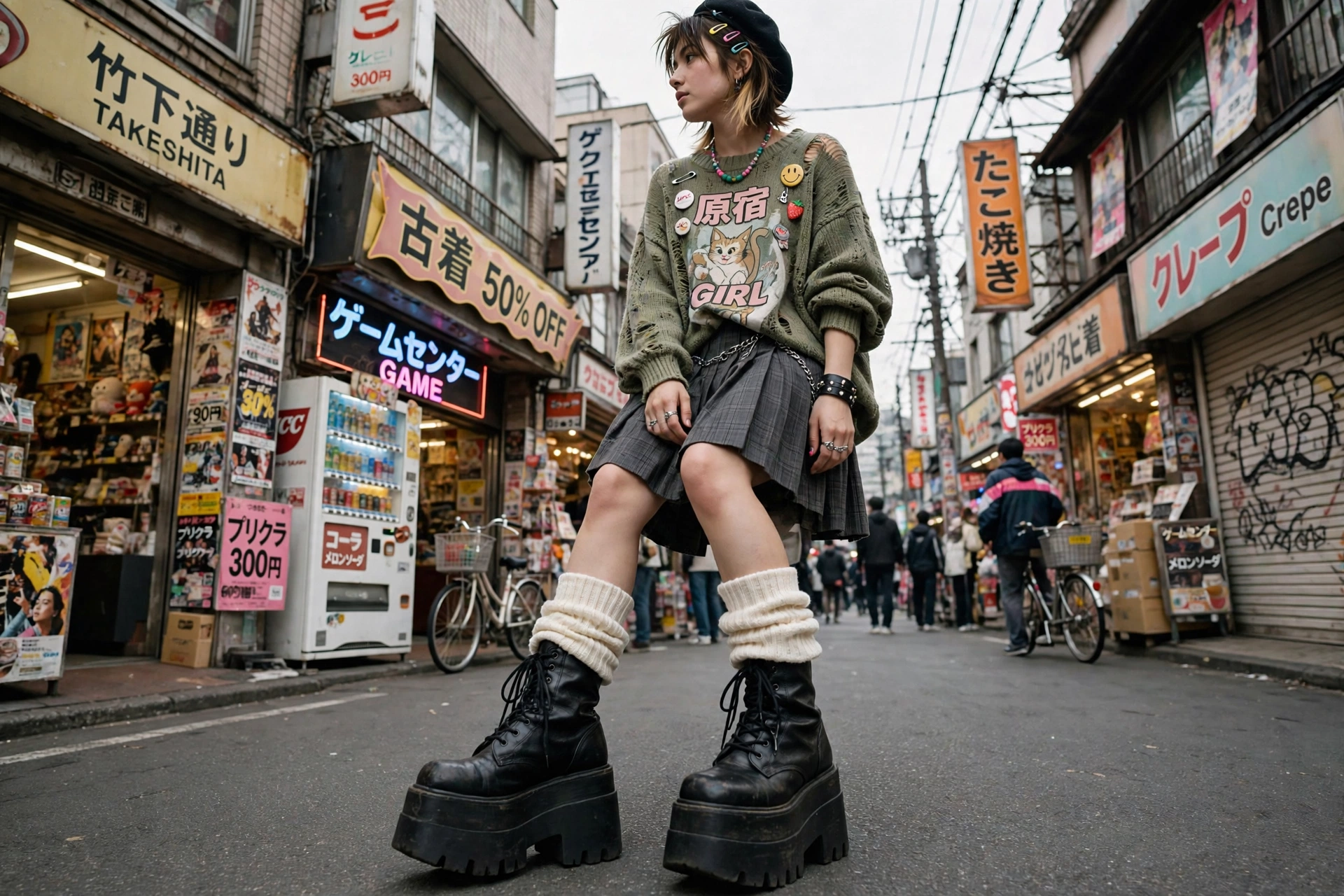
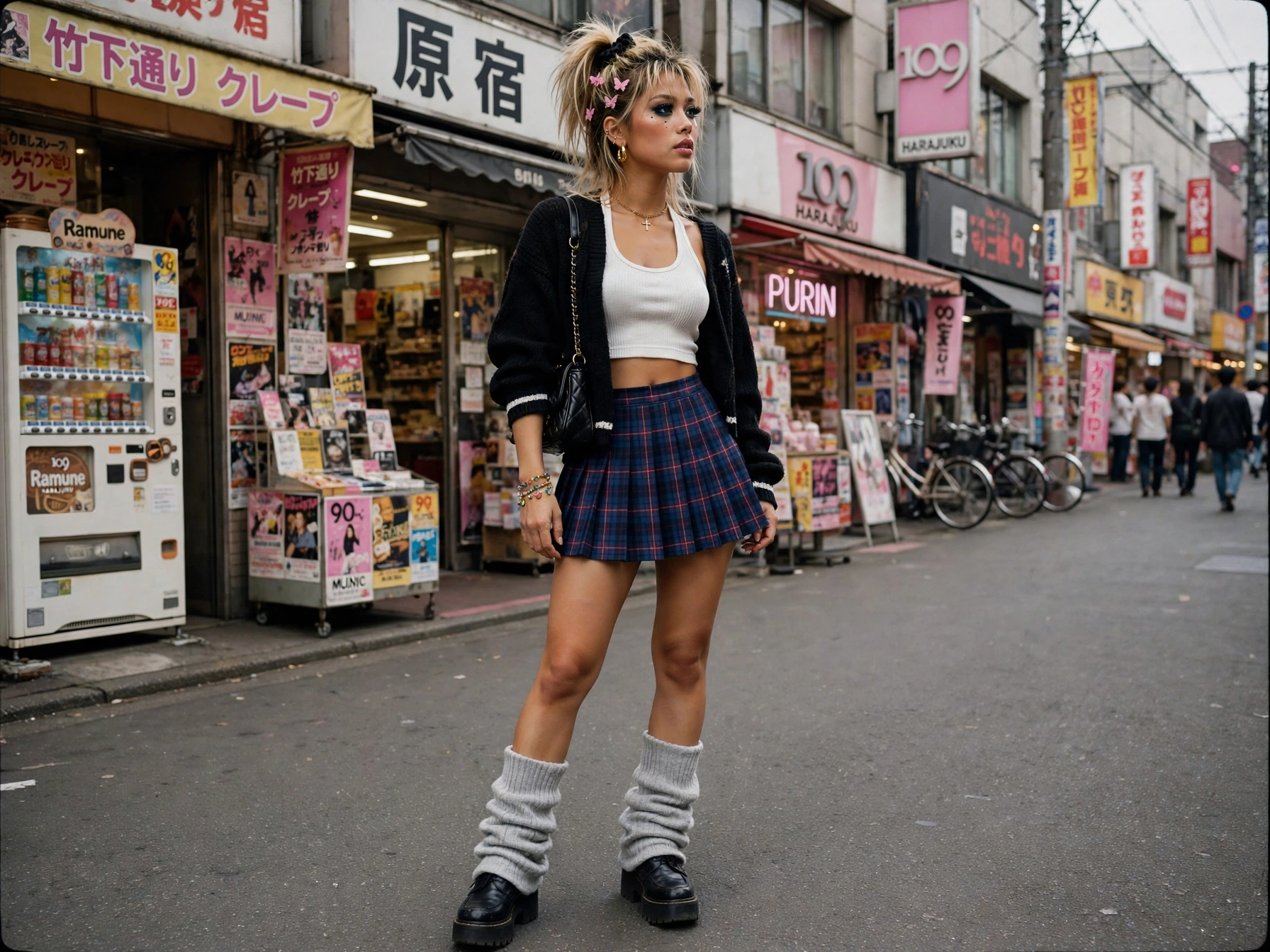
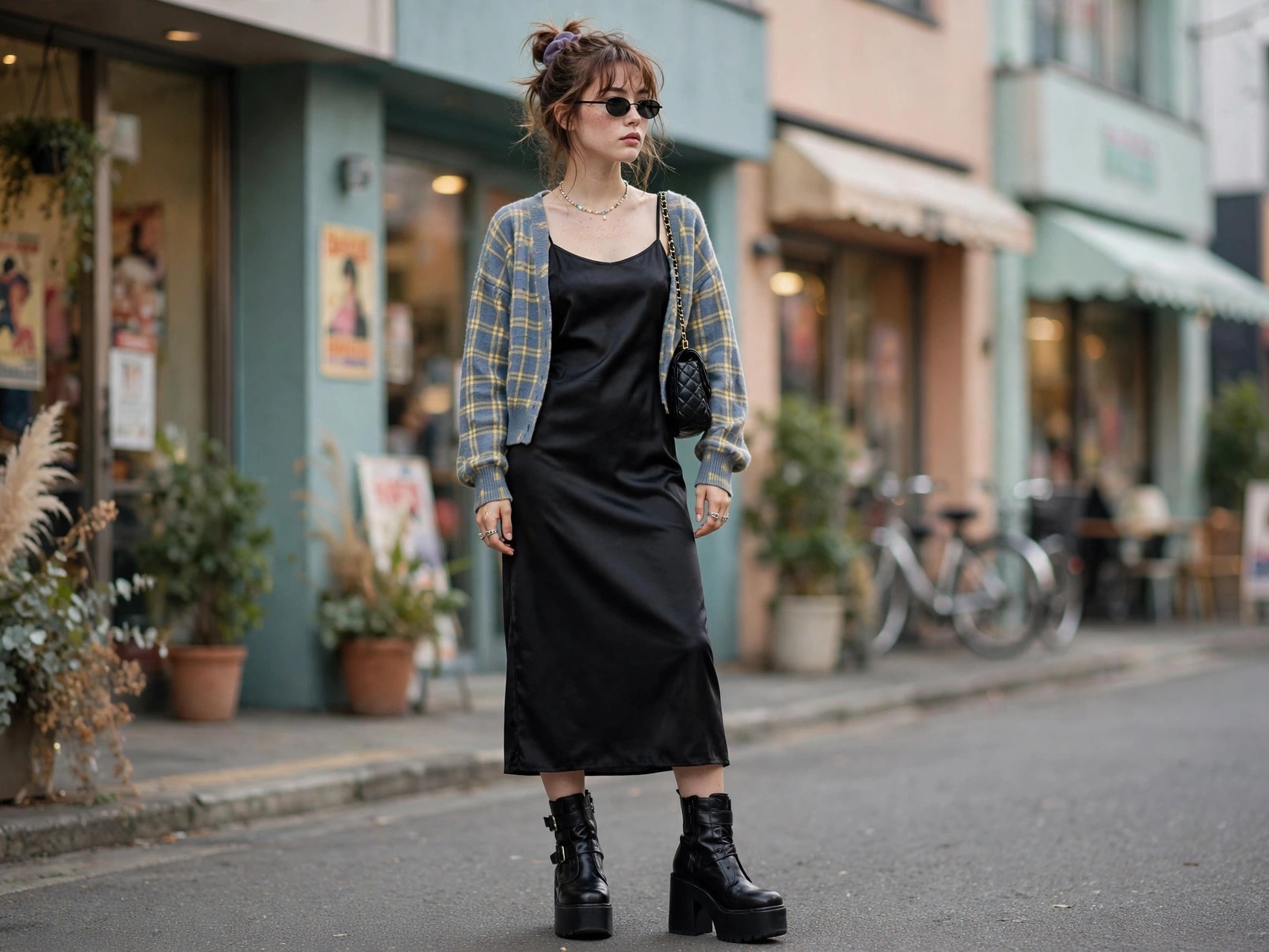
Platform boots and chunky sneakers. Sky-high platform boots were the gyaru staple; chunky sneakers ruled Harajuku. Either one instantly 90s-ifies a modern outfit.
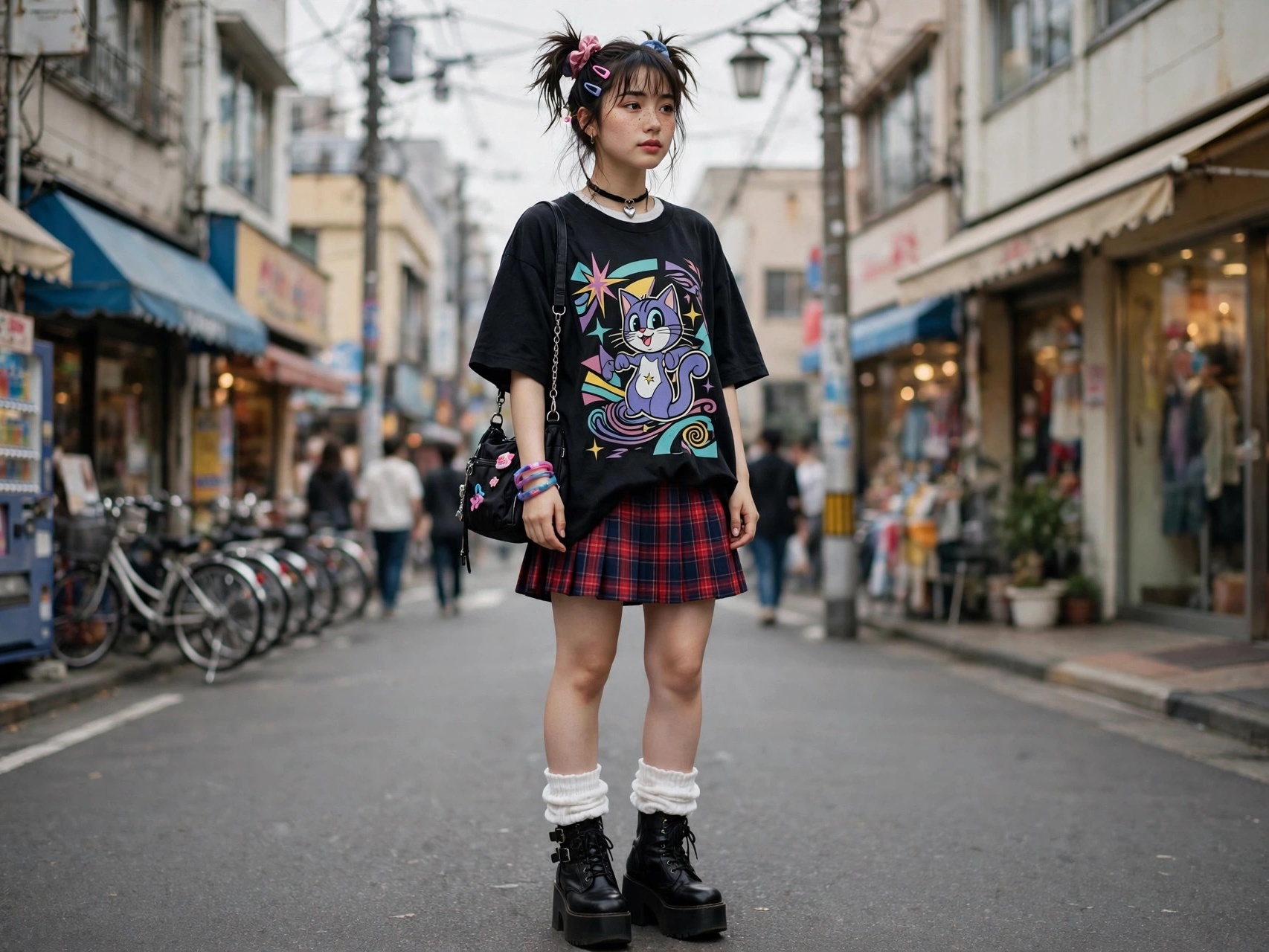
The mini skirt, super short. Pleated, denim, or vinyl — 90s Japanese fashion loved a micro mini, usually with loose socks or leg warmers.
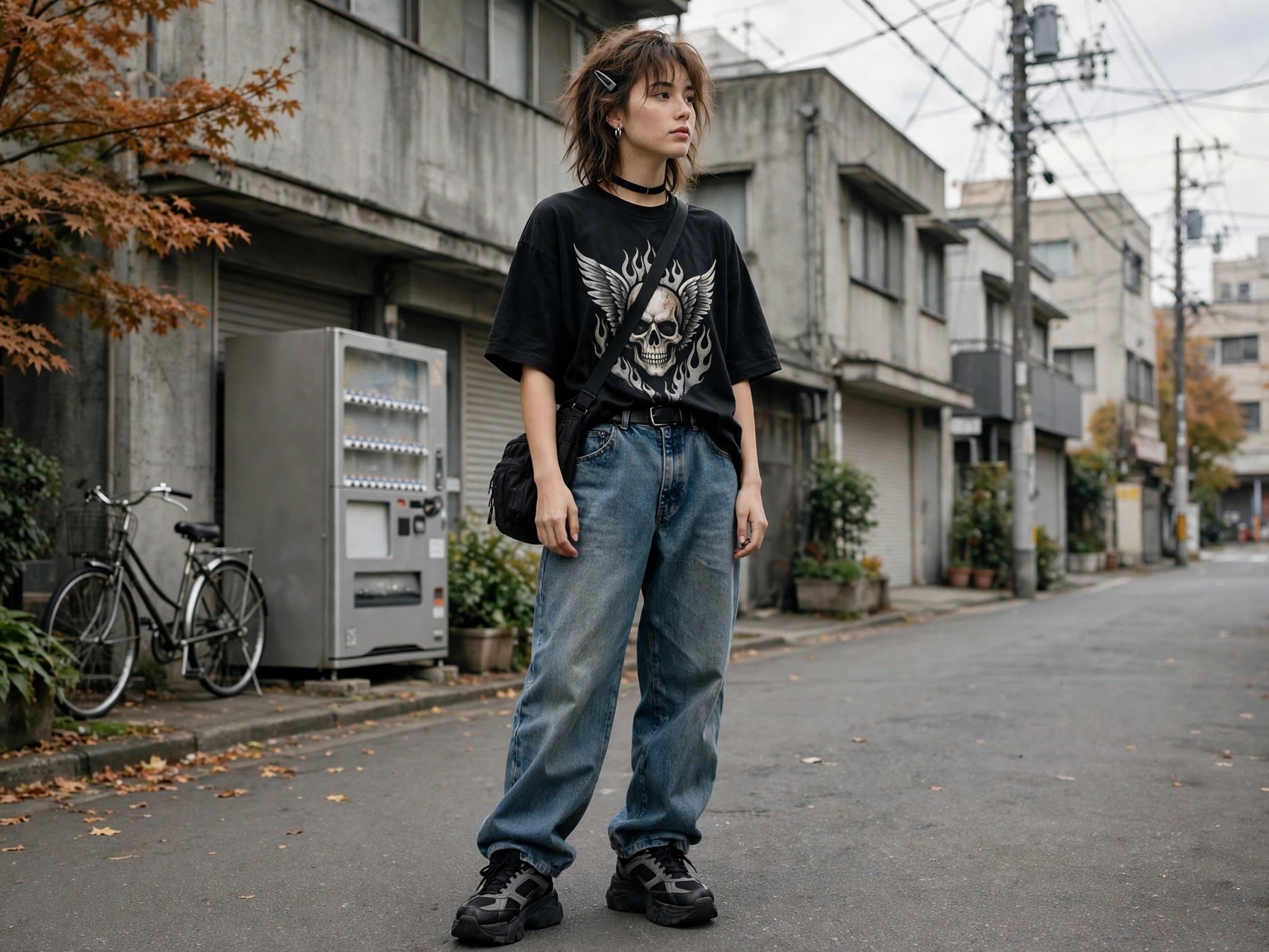
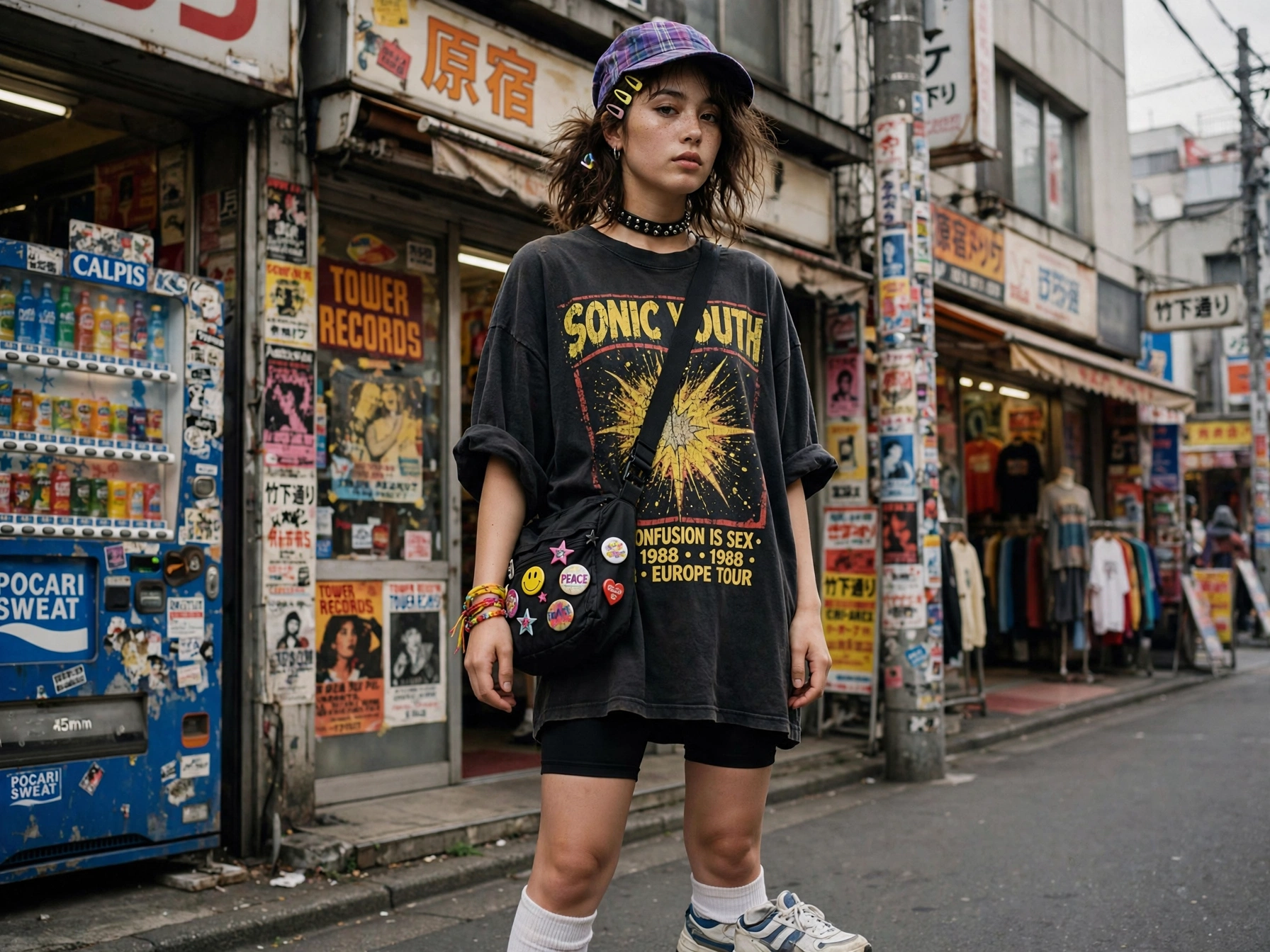
Oversized graphic tees. Boxy band tees and character prints, worn huge over bike shorts or tucked into baggy jeans. The slouchier the better.
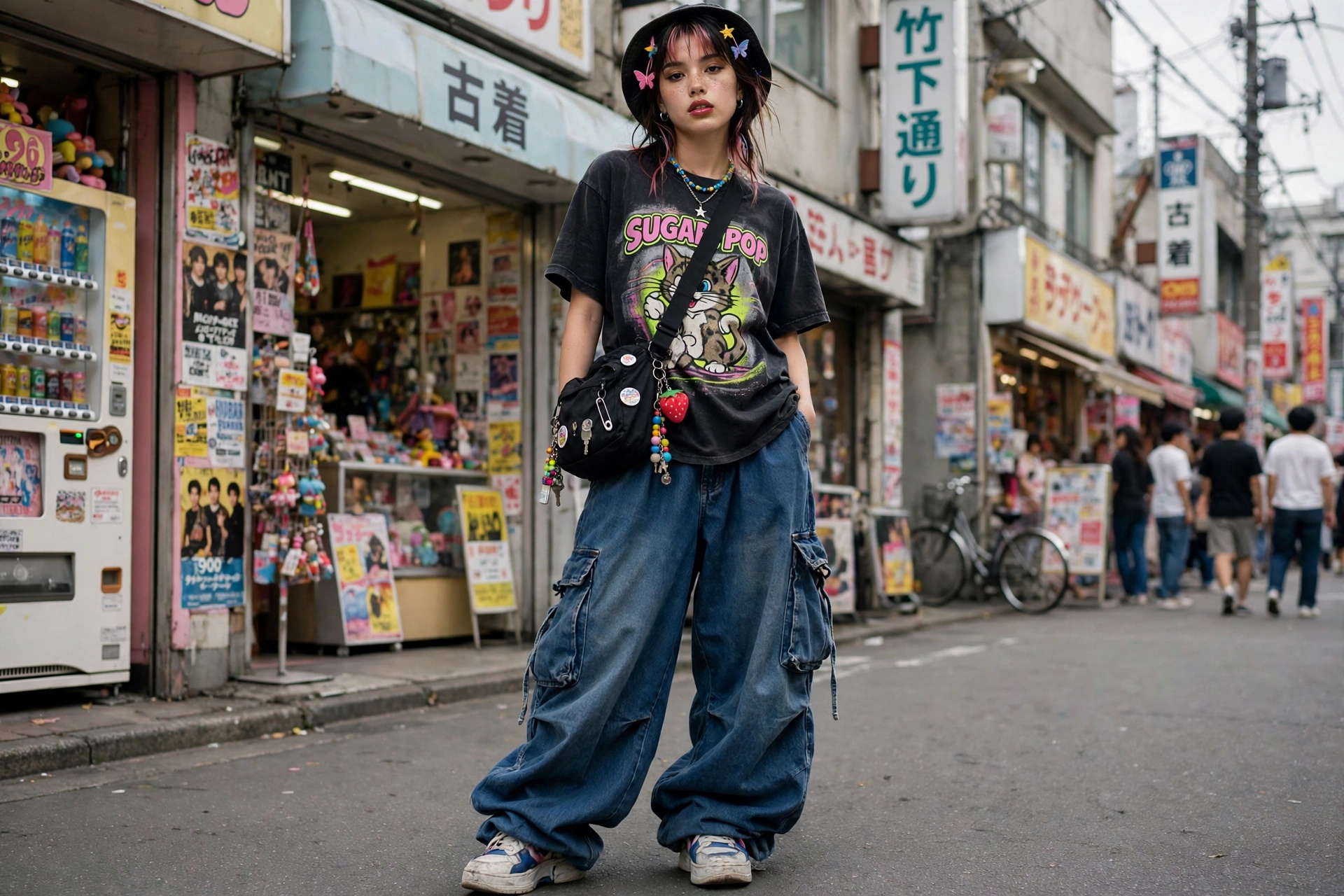
Baggy jeans and cargo pants. Low-rise, wide-leg, pooling at the ankle — 90s Japanese street style embraced volume long before it was trendy again.
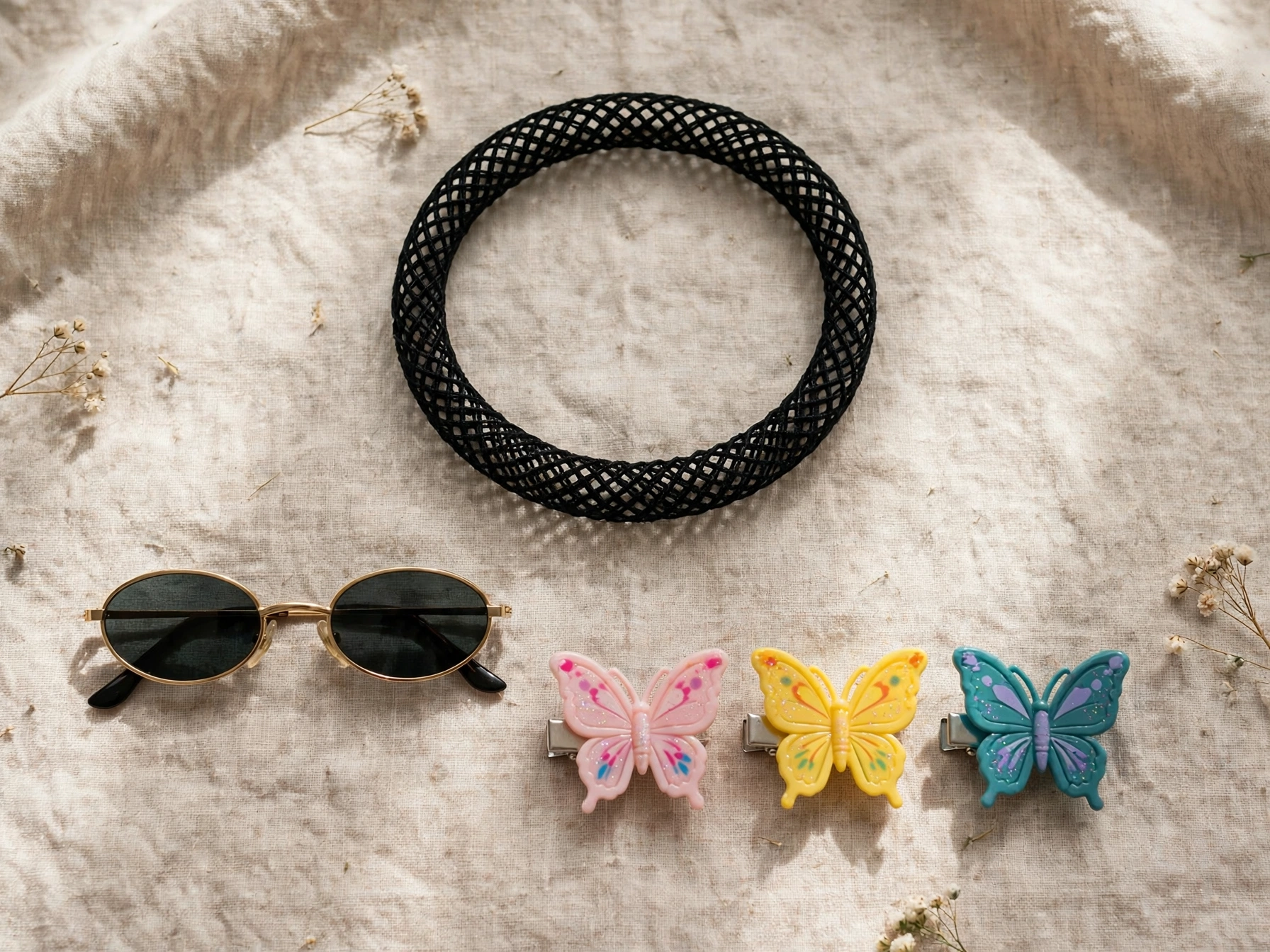
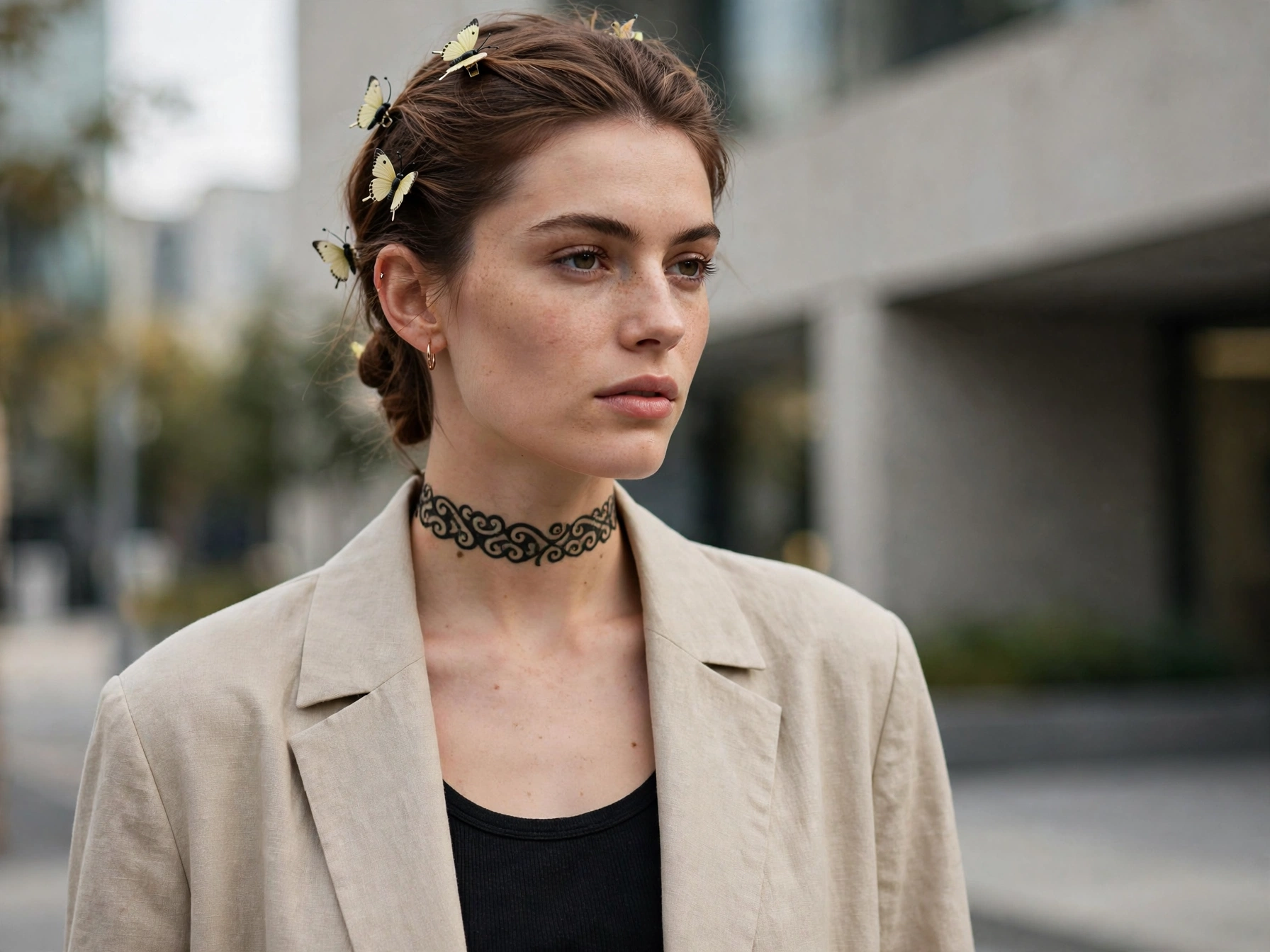
Chokers and tiny sunglasses. The accessories that sealed the deal: tattoo chokers, mini oval shades, and butterfly clips by the dozen.
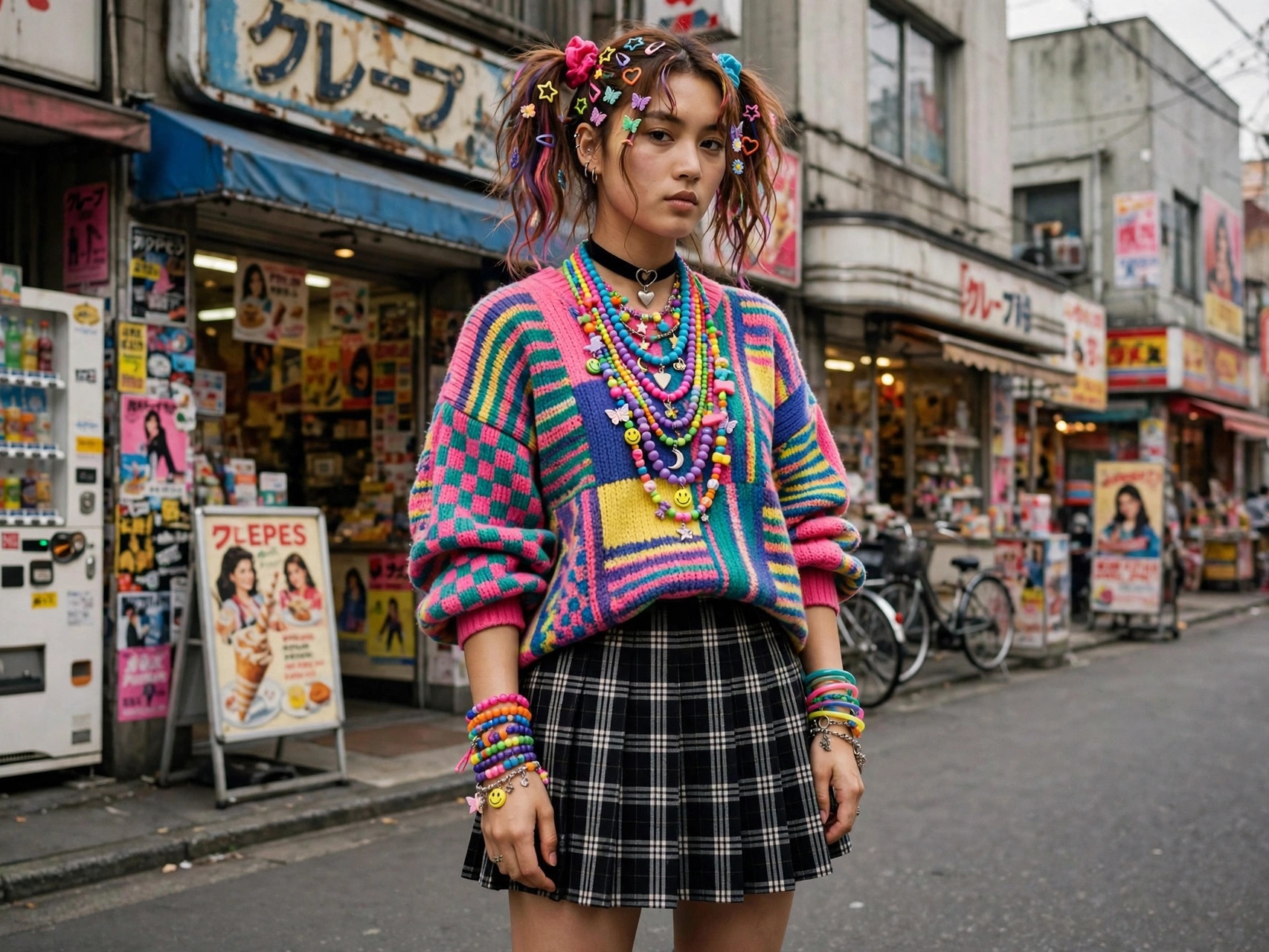
Color is where 90s Japanese fashion truly let loose. While today’s trends favor neutrals, the 90s Tokyo palette was electric: bubblegum pink, cyber silver, acid green, and clashing prints worn all at once. The decora subculture took this to its glorious extreme, layering dozens of plastic accessories, stickers, and bows into walking art installations.
You don’t need to go full decora to channel the era. One saturated color or one clashing print against an otherwise simple outfit captures the 90s Japanese fashion spirit without overwhelming your day. A neon bag with head-to-toe black, or a plaid mini with an oversized white tee, does the job.
Thrifting is the most authentic way to build this wardrobe — and the most 90s thing you can do. The original Harajuku kids mixed secondhand finds with DIY customizations: cut-up tees, safety-pinned skirts, hand-painted sneakers. Hit the vintage shops first, and don’t be afraid to alter what you find. Imperfection is part of the aesthetic.
How to Wear 90s Japanese Vintage Style Today
The secret to wearing 90s Japanese fashion now is restraint: one throwback statement per outfit, balanced with modern basics. Head-to-toe costume reads as cosplay; one vintage anchor reads as style.
Try these modern takes on 90s Japanese vintage style:
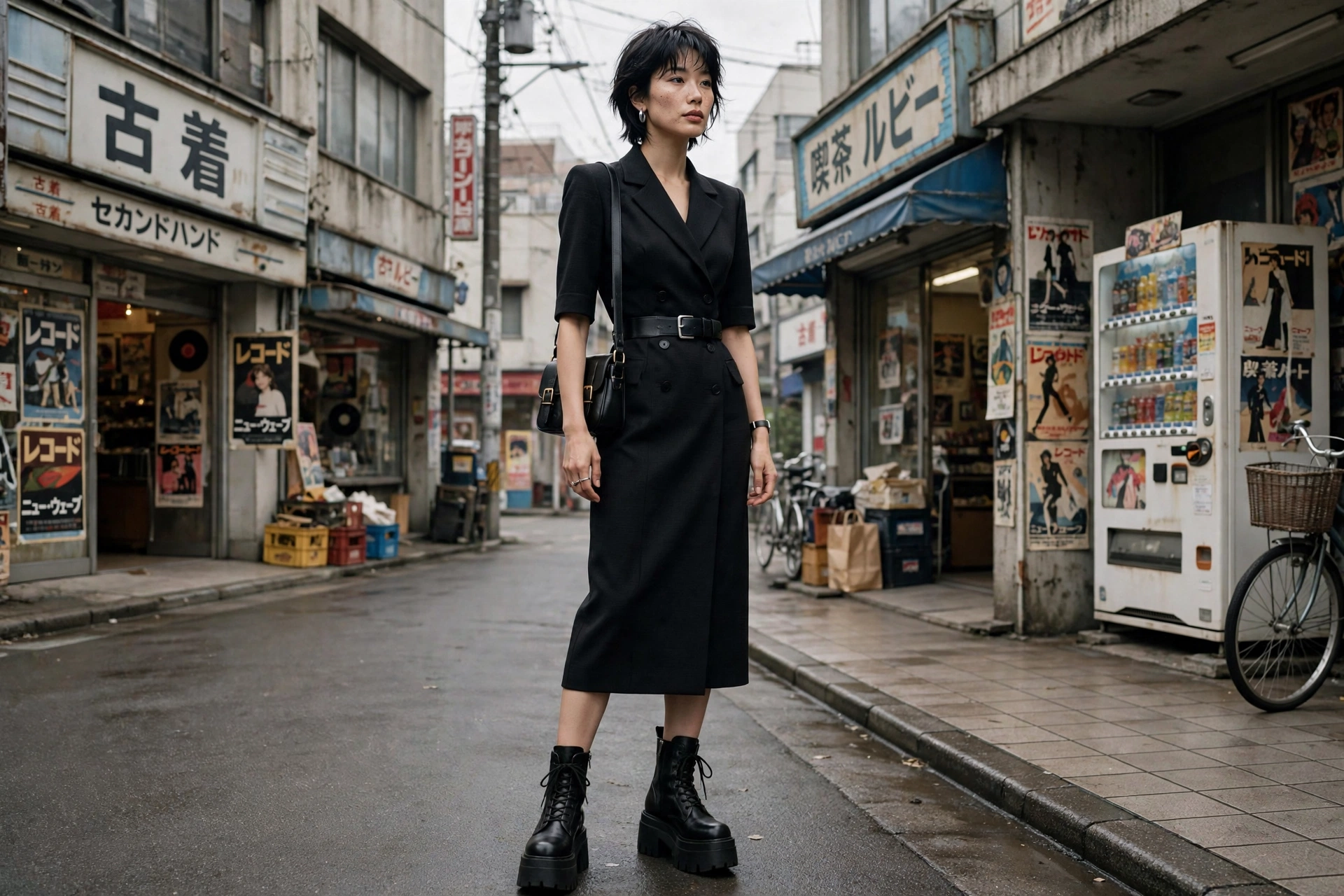
Platform boots + modern tailoring. Chunky platforms with a sleek midi dress or tailored trousers — 90s edge meets grown-up polish.
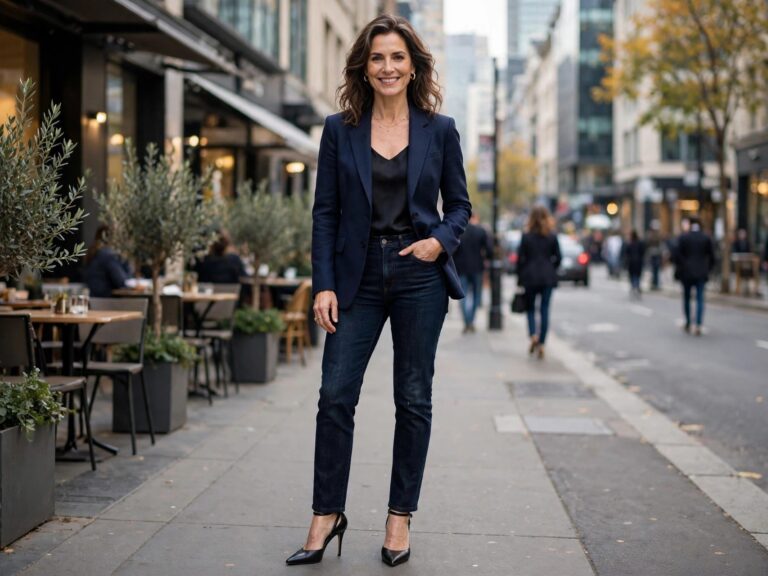
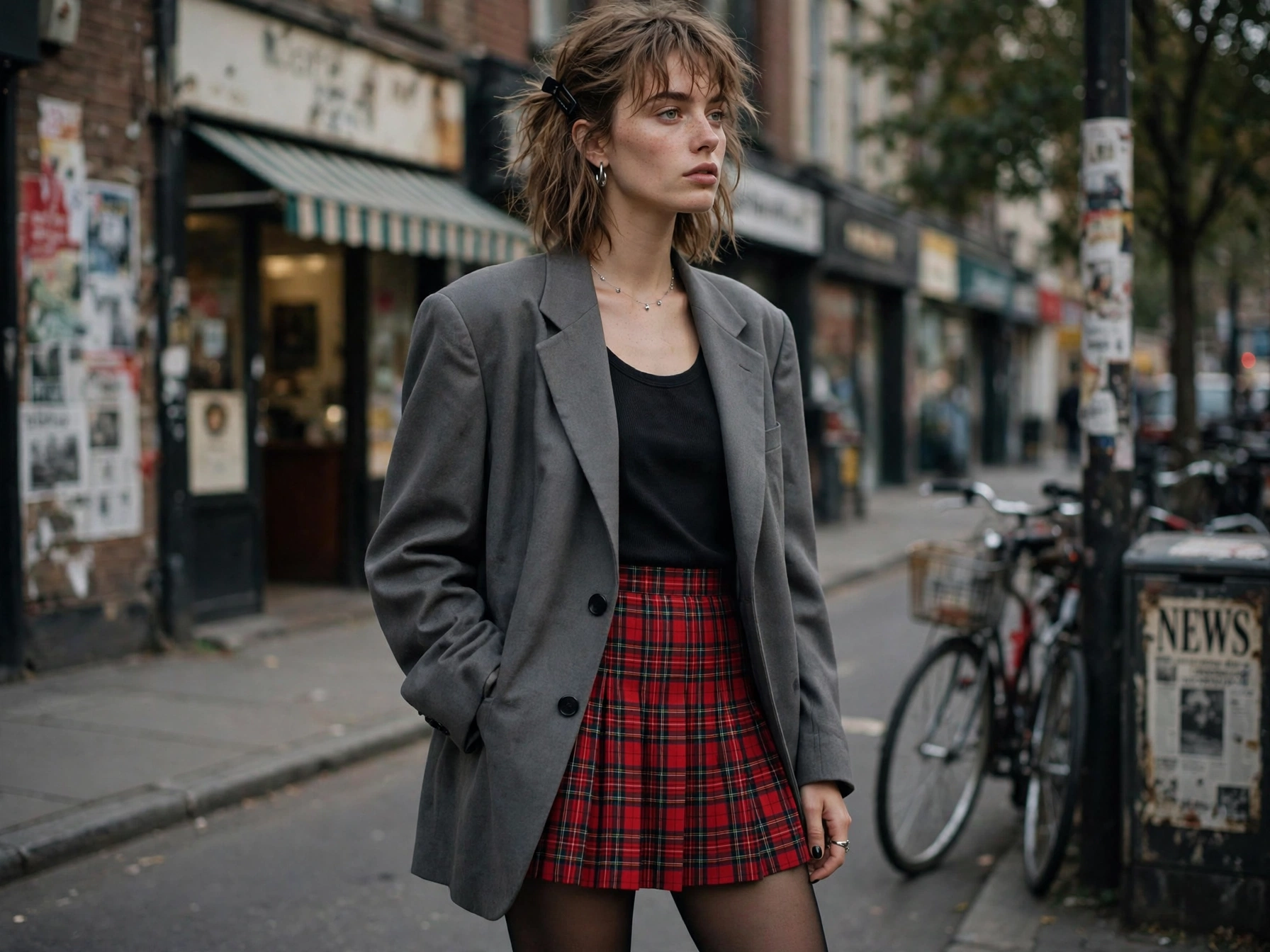
The mini with an oversized blazer. A 90s micro mini balanced by today’s oversized blazer is the perfect high-low mix.
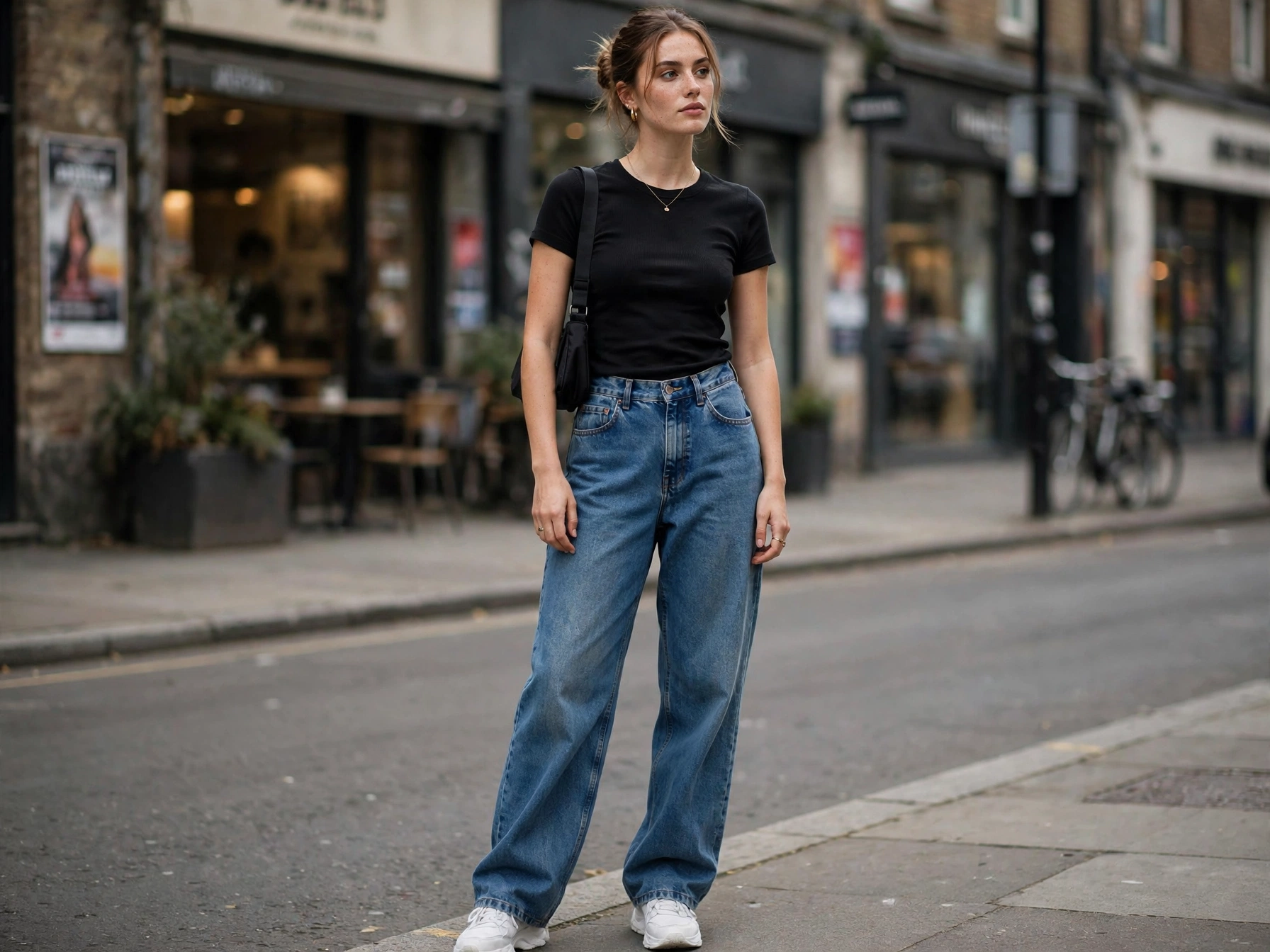
Baggy jeans, fitted top. Let the 90s volume live in the denim while a simple fitted top keeps the silhouette current.
One accessory throwback. A tattoo choker or butterfly clips with an otherwise contemporary outfit — a wink to the decade, not a time machine.
Fit adjustments matter. Original 90s Japanese fashion often ran extremely cropped or extremely baggy; today’s versions work best when you nudge proportions toward the middle. A slightly longer mini, a slightly less extreme platform — small tweaks that keep the look wearable for work, dinner, and everything between.
Hair and makeup complete the time travel. The 90s Japanese beauty look meant bleached or streaked hair, thin brows, glossy lips, and lots of glitter. You can borrow selectively: a glossy lip and a claw clip capture the vibe without the full gyaru commitment.
Most importantly, wear the confidence the original scene was built on. 90s Japanese fashion was never about expensive labels — it was teenagers with safety pins and imagination, dressing for the sheer joy of it. That playful courage is the real vintage treasure, and it’s completely free.
For modern Tokyo style, check our Japanese Women’s Fashion Trends to Try.
Frequently Asked Questions
What is 90s Japanese fashion known for?
Harajuku street style, gyaru culture, platform boots, mini skirts, oversized tees, baggy jeans, and fearless color clashing — all rooted in youth subcultures of 1990s Tokyo.
How do I dress 90s Japanese without looking like a costume?
Pick one throwback piece per outfit and pair it with modern basics. One vintage anchor plus contemporary staples keeps 90s Japanese fashion stylish, not theatrical.
Where can I buy 90s Japanese vintage clothing?
Thrift and vintage stores are best for authentic pieces like baggy jeans and graphic tees. Online vintage marketplaces and Japanese secondhand shops are great for harder-to-find items.
What shoes go with 90s Japanese fashion?
Platform boots, chunky sneakers, and loafers with slouchy socks are the holy trinity of 90s Japanese footwear.
Is 90s Japanese fashion still trendy in 2026?
Yes — Y2K and 90s revivals keep cycling, and Tokyo’s 90s archives remain a constant reference for designers and street style worldwide.
Final Thoughts
This 90s Japanese fashion vintage guide comes down to one idea: dress like you’re having fun. Hunt down a pair of platforms, thrift an oversized tee, clip in a butterfly or two — and wear it all with the fearless joy that made 1990s Tokyo the most exciting fashion laboratory on earth. The decade is calling; will you answer? For more on the district that started it all, see Wikipedia’s overview of Harajuku.