Stylish Business Casual Outfit Ideas

Business casual is the dress code almost everyone lives in — and almost no one defines clearly. The best business casual outfit ideas strike that sweet spot between polished and relaxed: professional enough for the office, comfortable enough for real life. Get it right, and getting dressed in the morning becomes the easiest part of your day.
This guide breaks business casual down into simple, wearable formulas. You’ll find the essential pieces that make the dress code work, plus styling tips that keep every outfit looking intentional — never sloppy, never overdressed. Let’s build a business casual wardrobe that actually works as hard as you do.

Business Casual Outfit Ideas: Essential Pieces
Business casual works when your closet holds the right building blocks. These versatile pieces mix and match into endless polished combinations:
- Dark jeans or chinos. Clean, dark-wash jeans with no rips or fading are business casual staples in most modern offices. Chinos in khaki, olive, or navy are an equally safe bet.
- Blouses and button-downs. From silk blouses to crisp Oxford shirts, a good top instantly elevates casual bottoms. Keep a few in white, blue, and subtle prints.
- Knit tops and sweaters. Fine-gauge knits, merino sweaters, and polished cardigans bridge the gap between comfort and professionalism beautifully.
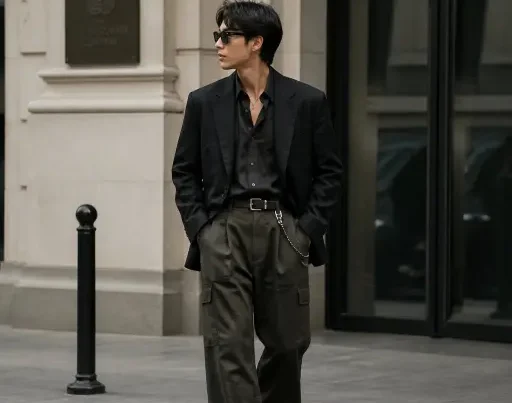
- Blazers and soft jackets. An unstructured blazer is the fastest way to make jeans look office-ready. It adds structure without the formality of a full suit.
- Midi skirts and dresses. A knit midi dress or an A-line skirt with a tucked-in top reads polished but never stiff — ideal business casual outfit ideas for warmer months.
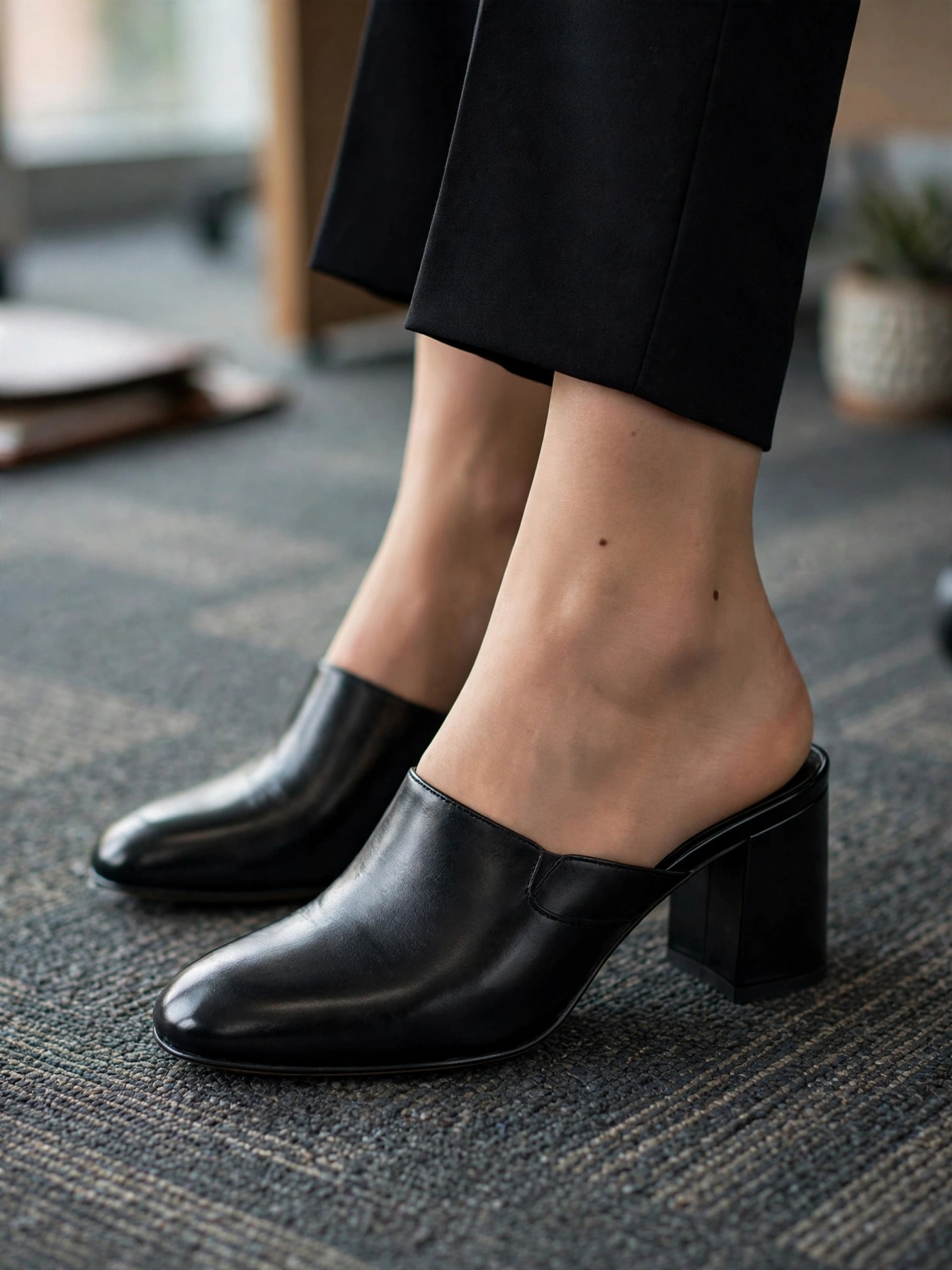
- Smart flats and loafers. Loafers, ballet flats, block-heel mules, and clean white sneakers (in casual offices) keep you comfortable while looking put-together.




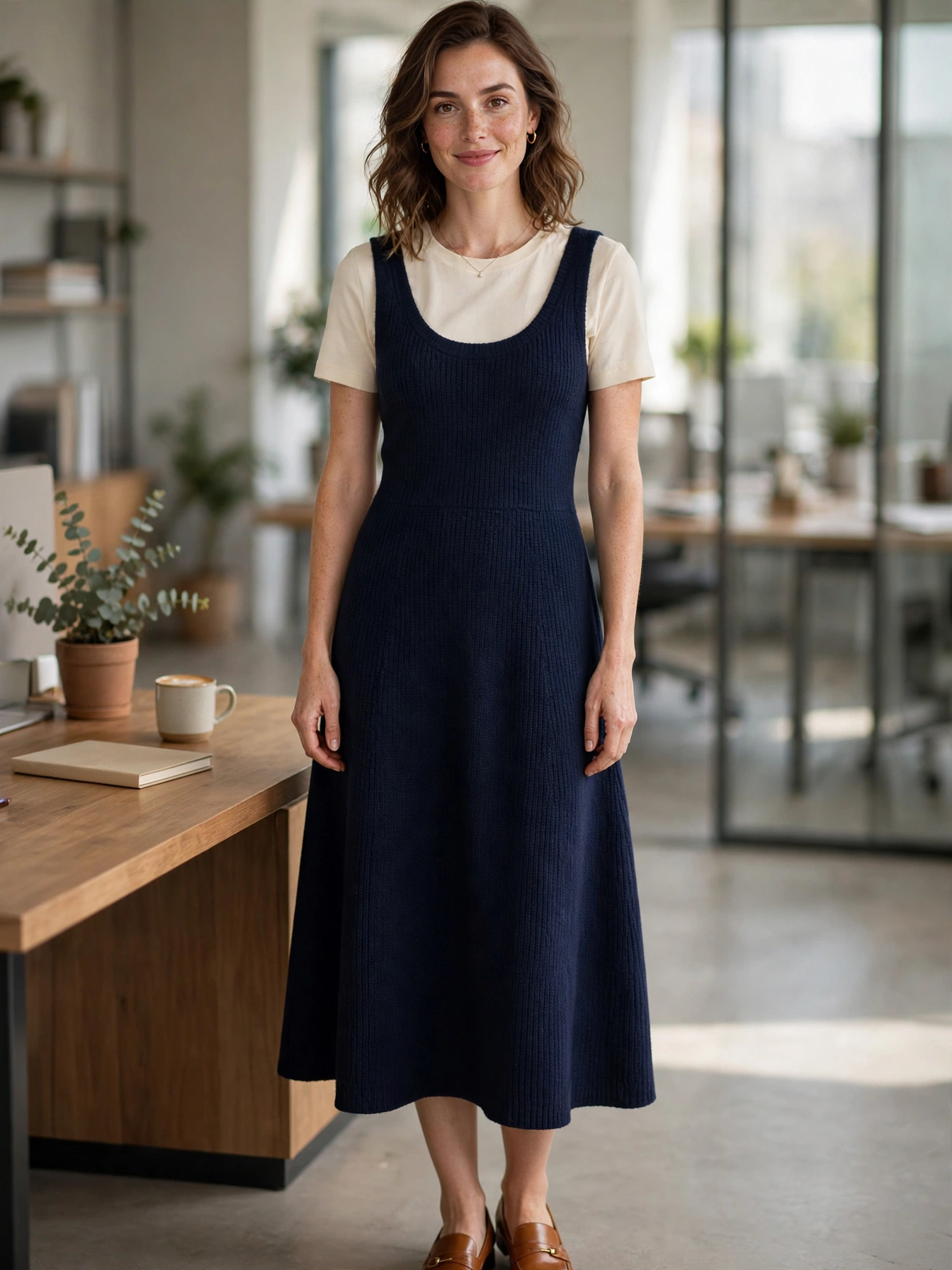
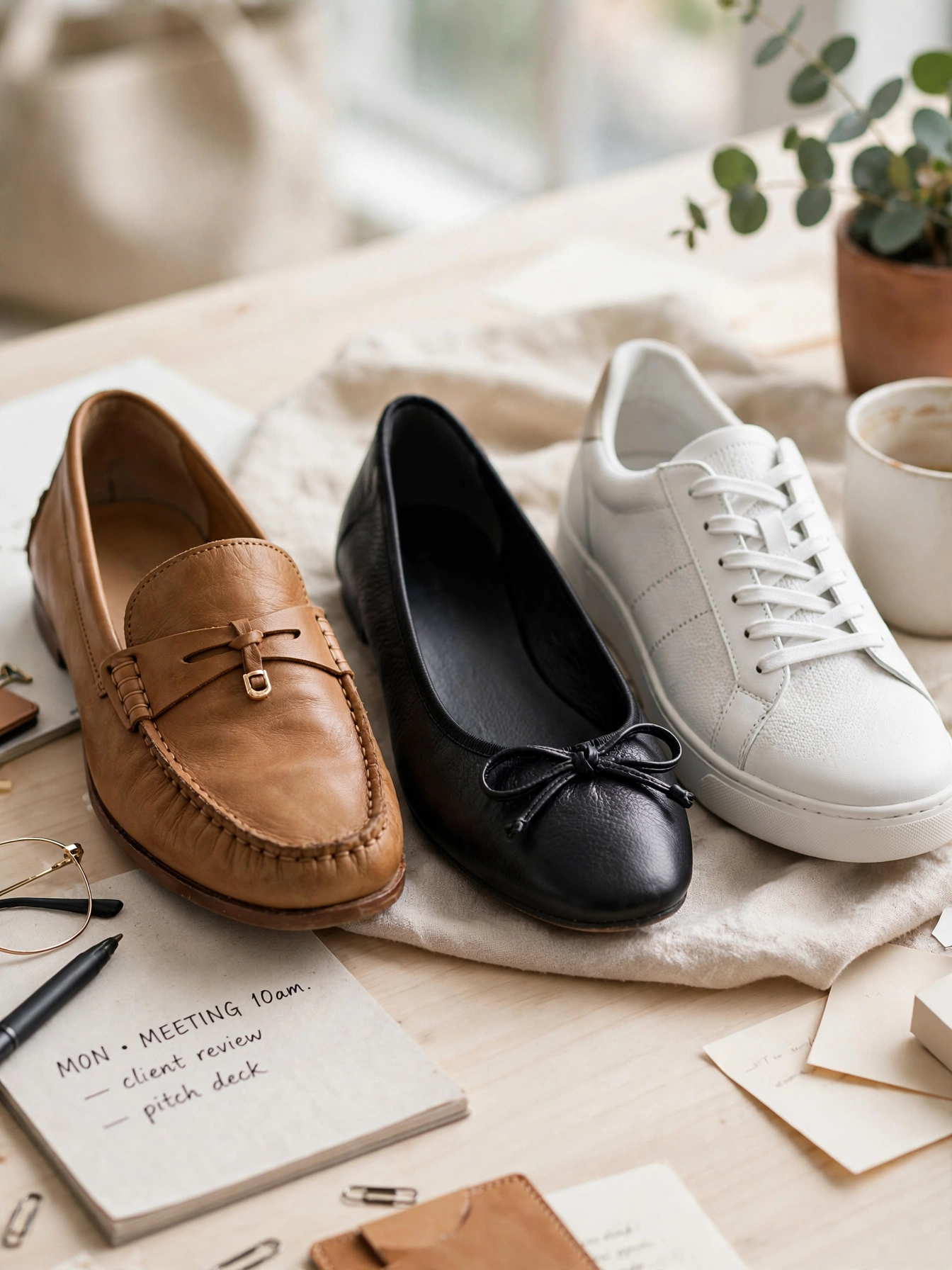
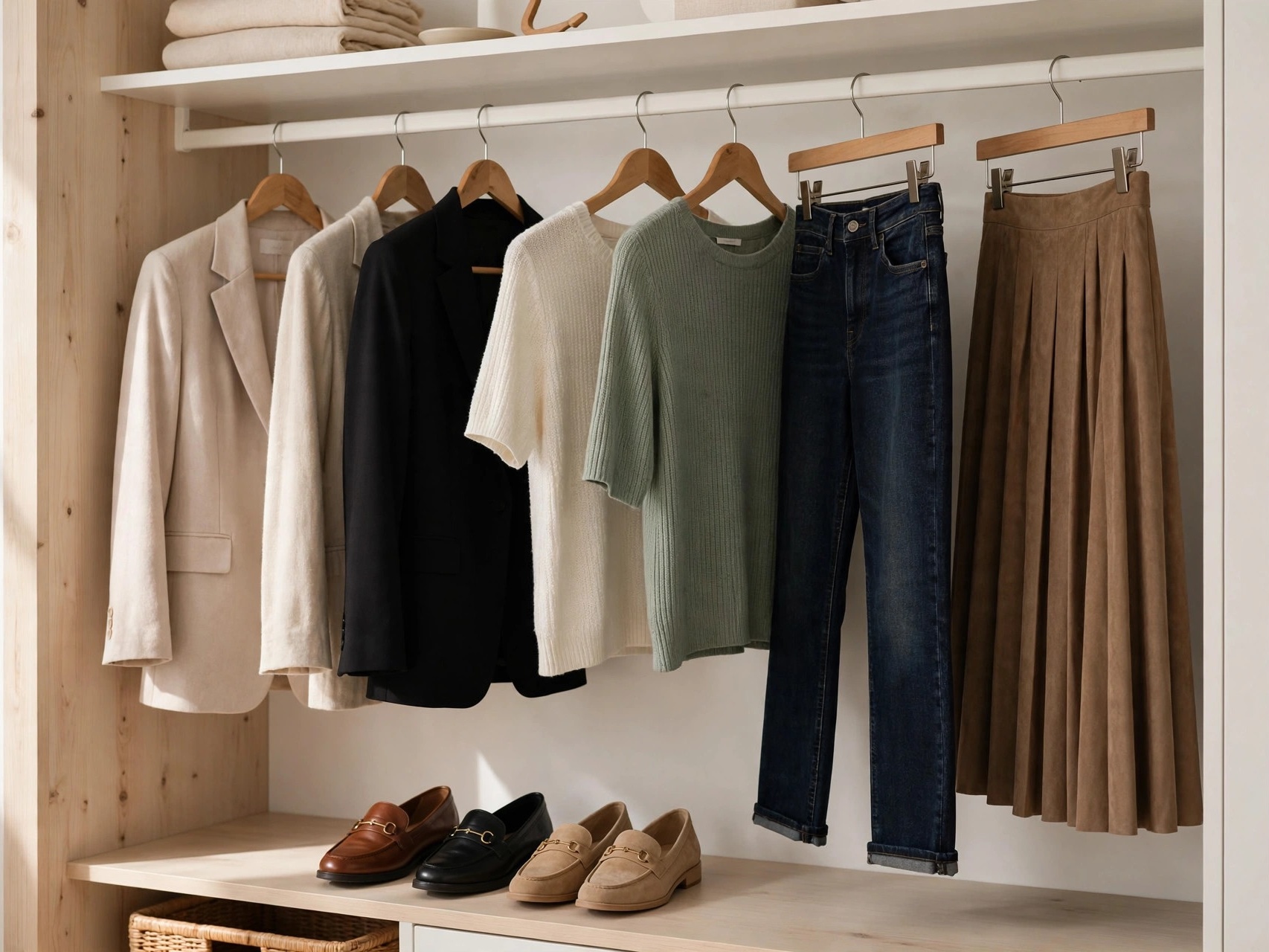
The key to business casual is balance: if the bottom is casual (jeans), the top should be polished (blouse + blazer). If the bottom is dressy (tailored trousers), you can relax the top (a fine knit). This push-pull keeps every outfit in the right zone. One fully casual piece per outfit is the rule of thumb — two and you drift into weekend territory.
Don’t forget seasonal flexibility. In summer, swap heavy knits for breathable linen shirts and sleeveless blouses under an open blazer; in winter, layer turtlenecks under blazers and trade loafers for sleek ankle boots. A business casual wardrobe that adapts to the weather keeps you comfortable without ever looking out of place.
Fabric and fit do the heavy lifting. Even casual pieces look office-appropriate in quality materials with a clean fit: structured denim instead of flimsy jeggings, a fitted knit instead of an oversized sweatshirt. When in doubt, choose the slightly dressier option — it’s always easier to look intentionally polished than to recover from looking underdressed.
How to Nail Business Casual Every Day
With the essentials in place, these styling habits keep your business casual outfits sharp day after day:
- Follow the one-third rule. Aim for roughly one-third polished pieces (blazer, blouse, loafers) to two-thirds casual (jeans, knit). Adjust the ratio to your office’s culture.
- Keep a blazer at your desk. A neutral blazer hanging on your chair is an instant upgrade for surprise meetings or after-work plans. It’s the business casual safety net.
- Tuck or half-tuck your top. Showing your waistline with a tuck or French tuck makes even jeans-and-sweater combos look deliberate and neat.
- Choose closed, clean shoes. Footwear sets the tone: loafers and mules say office, while worn sneakers say weekend. Keep work shoes clean and in good repair.
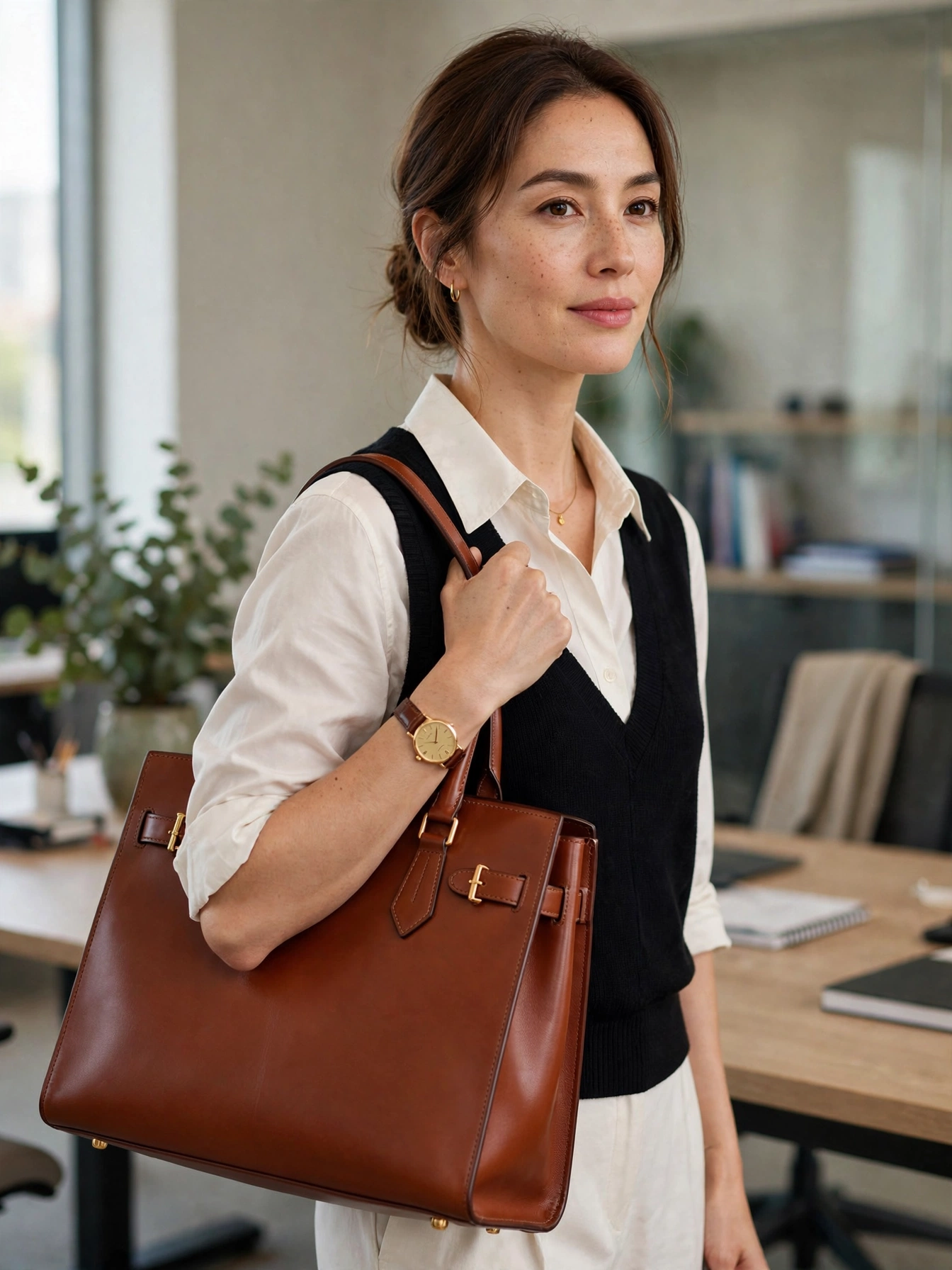
- Add one polished accessory. A structured tote, a classic watch, or simple jewelry signals intention. Business casual fails when every detail is casual.
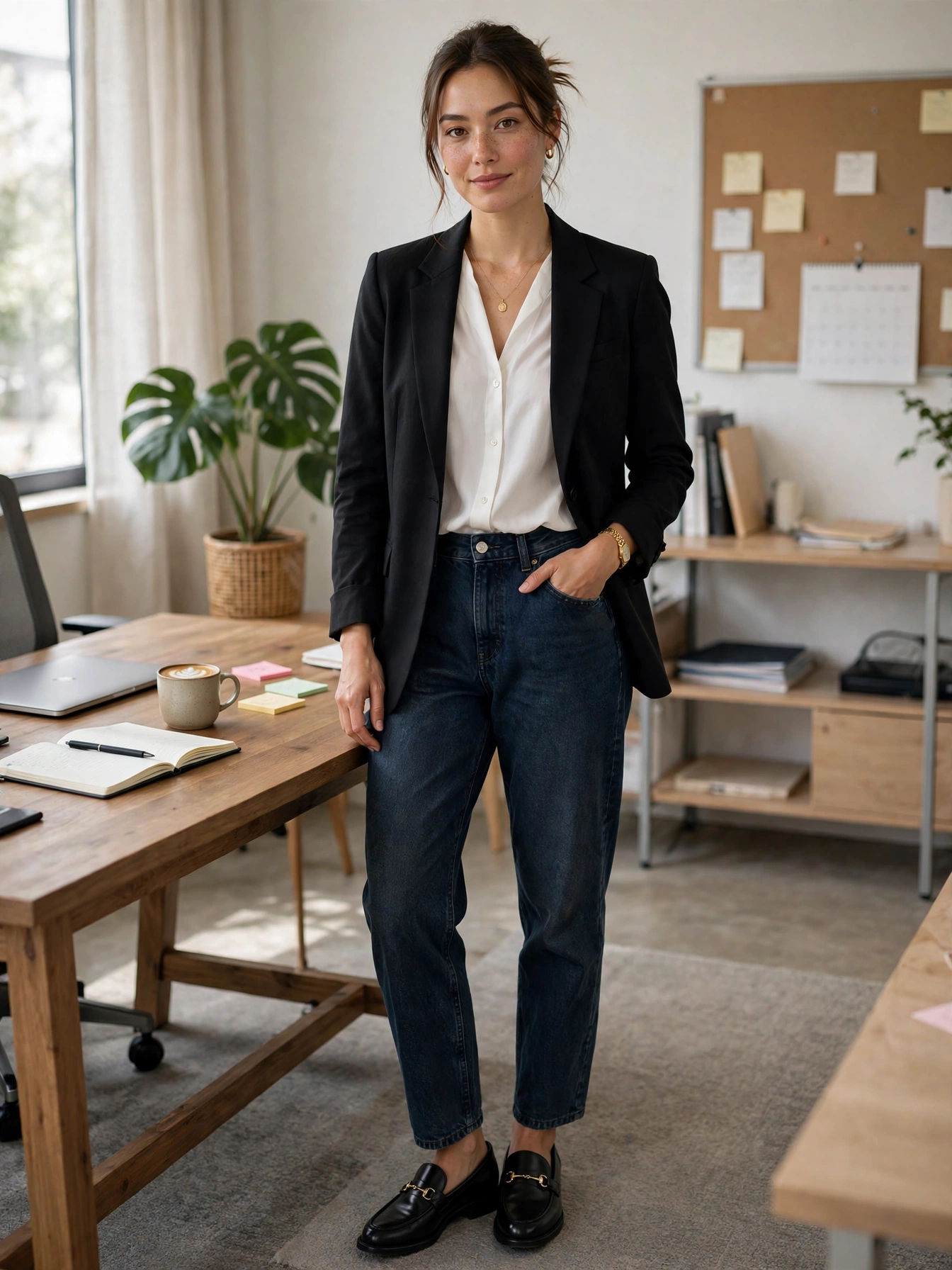



Know your office’s version of the dress code. Business casual at a tech startup and at a law firm are different worlds — observe what respected colleagues wear and calibrate. When starting a new job, dress one notch above the norm for the first two weeks until you read the room.
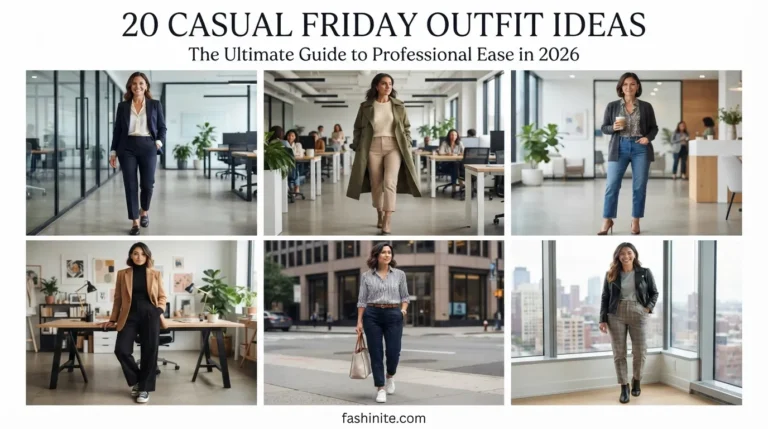
Finally, build go-to formulas so busy mornings stay easy. Try: dark jeans + silk blouse + blazer + loafers. Or: knit midi dress + structured tote + block heels. Or: chinos + Oxford shirt + soft cardigan. Three reliable formulas, endless variations — that’s the real secret behind stylish business casual outfit ideas that work every single day.
FAQs About Business Casual Outfits
What exactly counts as business casual for women?
A mix of polished and relaxed pieces: blouses, blazers, dark jeans or chinos, knit tops, midi skirts, and smart flats or loafers. It excludes formal suits as well as weekend wear like shorts, flip-flops, and graphic tees.
Are jeans acceptable as business casual?
In most modern offices, yes — as long as they’re dark, clean, well-fitted, and free of rips or heavy fading. Pair them with a polished top and blazer or smart shoes.
Can I wear sneakers in a business casual office?
Minimalist, clean sneakers in white or neutral tones work in casual workplaces, especially with tailored pieces. Avoid athletic or worn-out styles.
How do I dress business casual without looking boring?
Add texture, subtle prints, and one interesting accessory — a patterned scarf, statement earrings, or a colorful bag. A consistent color palette with one accent keeps things lively yet professional.
What’s the difference between business casual and smart casual?
Business casual leans professional (blazers, blouses, tailored pieces with relaxed elements), while smart casual leans fashionable (trendier pieces styled neatly). Business casual is the safer choice for the office.
Conclusion
Business casual doesn’t have to be confusing. Stock your closet with versatile essentials, balance one casual piece with polished ones, and keep a blazer within reach. Master those basics and you’ll walk into work looking effortlessly sharp — every single day. For the broader concept, see Wikipedia’s overview of smart casual.